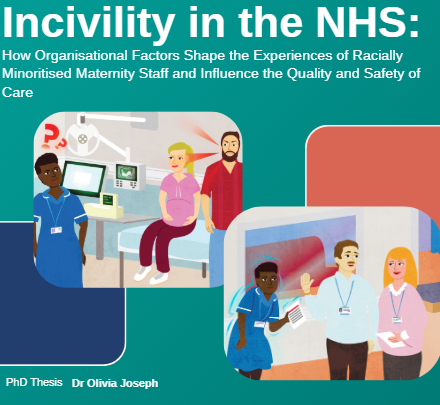
Workplace incivility is a common experience in healthcare, both globally and in the UK. Uncivil behaviours at work can cause significant harm to staff wellbeing, teamwork and patient safety. Despite the NHS promoting equality, diversity, and inclusion, racially minoritised staff remain unfairly exposed to unprofessional behaviours. The dynamics of incivility and its varied impacts are often overlooked, with limited evidence.
To address this knowledge gap, this research included four studies to explore racially minoritised staffs incivility experiences and consequences. The first two were exploratory to support decision-making, followed by two ethnographic studies in maternity settings:
- First, a structured review of international evidence identified eight types of incivility, four dimensions of experience and multilevel consequences. The current evidence primarily focused on doctors and nurses, with less understanding about midwives and support staff within the maternity context.
- Second, an analysis of NHS staff data showed that civility and compassionate leadership are unevenly experienced across Trusts and between all ethnic groups.
- The third study found incivility from colleagues, pregnant and birthing women and visitors embedded in routine work practices, social interactions and apathetic management.
- Finally, interviews with staff in “listening roles” revealed that reporting systems rarely recognised the racialised nature of incivility, allowing it to persist. These findings show current approaches fail to understand how racism manifests and interacts with incivility.
Recommendations include targeted and effectively evaluated equity training, accountability in leadership, and embedding racial literacy into NHS safety systems to create safer, fairer workplaces.
You can download a visual summary of the research here: